Wasp Control for professional pest controllers has taken a huge blow with the loss of our most effective product in Ficam D. But it’s not about how hard you get hit, it’s about how hard you can get hit and keep moving forward.
Why Was Ficam D Was Withdrawn?
Ficam D contained bendiocarb, a highly effective active ingredient, but also a highly toxic one.
When you look at LD50 values (a measure of toxicity), bendiocarb is dramatically more dangerous than modern alternatives like permethrin. If you’re in charge of protecting public health, and two products are equally effective but one is much safer, it’s a no-brainer which one you would keep.
Ficam D was withdrawn because it no longer met modern safety standards, not because it didn’t work. And as professional pest controllers, our responsibility is to adapt.
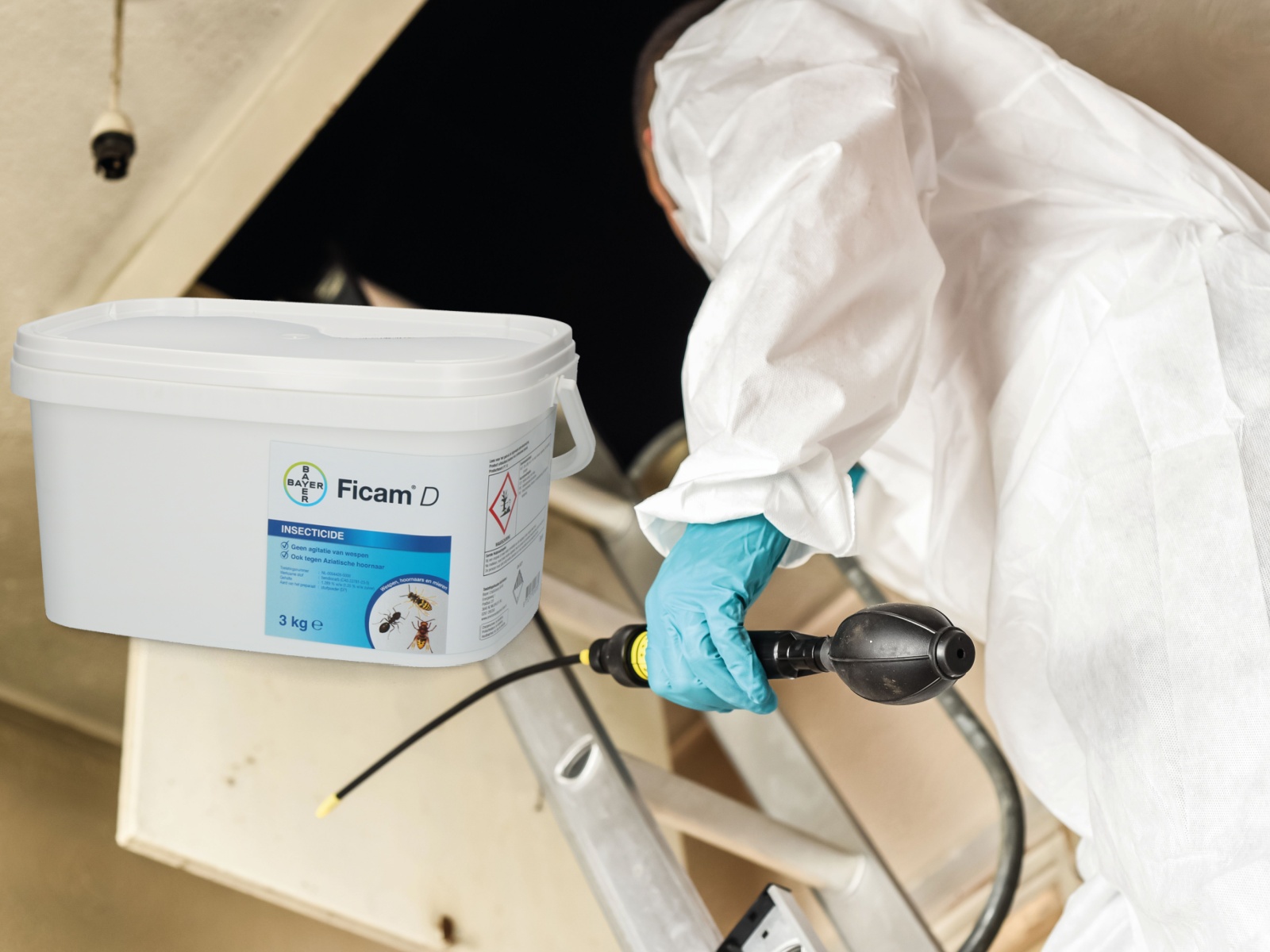
New Dusts, New Challenges
There are alternatives to Ficam D on the market: various pyrethroid-based dusts. But they behave very differently.
Where bendiocarb was slow-acting and non-repellent, allowing wasps to pick up the dust, re-enter the nest, and spread it. Pyrethroids are faster-acting and often repellent. That changes everything.
When we used bendiocarb, the wasps did the work for us. They carried the pesticide deep into the nest without realising. With pyrethroids, a wasp might die at the entrance or be repelled before spreading the product effectively.
That means we can no longer rely on the same “spray and walk away” techniques. Wasp control is becoming a skilled job again, and that’s something to celebrate.
Wasps Will Behave Differently Now Too
Because pyrethroid dusts are faster acting and more repellent, we will see more defensive behaviour from wasps during treatment. That makes full PPE even more critical.
It might also change the best time of day to treat a nest. Evening treatments, when most wasps are inside, could become more effective, but we will need to adjust our risk assessments, costs and working practices accordingly.
A Future Built on Skills, Not Shortcuts
The end of Ficam D isn’t the end of wasp control. It’s the start of a new era — one where pest controllers who genuinely understand their craft will rise above those who simply relied on easy chemicals.
Read our labels. Update our risk assessments. Sharpen our skills.
We’re not losing wasp control. We’re gaining an opportunity to be better.
Practical Changes to Your Wasp Control
Here’s how the end of Ficam D changes our approach:
If we can’t access the nest we will:
- Manage customer expectations about potential two-visit treatments
- Consider alternative formulations like aerosols or wettable powders
- Consider the application equipment we select and how far they will deposit the product
- Be clear that complete eradication might take longer
- Not offer a guarantee of a single visit and single fee
If we can access the nest directly we will:
- Inject products carefully into the nest, not just around it
- Use lower-repellency products where possible
- Consider other formulations, such as liquids and foams
- Monitor carefully after treatment
- Remove the nest where practically safe to do so
- Guarantee treatment
Professional Wasp Control Across Leicestershire
At GC Pest Control, we provide expert wasp nest removal services throughout Leicestershire, adapting to industry changes to keep our customers safe and protected. We cover:
- Leicester
- Loughborough
- Melton Mowbray
- Market Harborough
- Hinckley
- Coalville
- Oadby & Wigston
- Blaby
- Rutland and surrounding villages
Wherever you’re based, our experienced team is ready with up-to-date training, safe products, and professional methods that deliver results.